Cheap vs Expensive Robot Vacuums: What Actually Changes?
When shopping for a robot vacuum, the price range can feel ridiculous.
You’ll see models for $150.
Then others for $900+.
So what’s the difference?
Are expensive robot vacuums actually better — or are you just paying for branding and app features?
The truth is:
Some things change dramatically between cheap and expensive models.
Some things barely change at all.
Let’s break down what actually matters before you decide where to spend your money.
This is where price differences are most noticeable.
Cheap robot vacuums usually rely on basic bump navigation.
They:
- Move randomly
- Bounce off walls
- Eventually cover most of the room
It works — but it’s inefficient.
Expensive models typically use LiDAR or advanced visual mapping.
They:
- Map your home
- Clean in organized rows
- Avoid repeating areas
- Allow room-by-room control
If you’ve ever wondered why some vacuums rarely get stuck while others constantly do, navigation is usually the reason.
If this is a major concern, Why Robot Vacuums Get Stuck (And How to Prevent It) explains how mapping affects real-world performance.
Navigation is the clearest upgrade as price increases.
Suction Power: Does It Double With Price?
Not exactly.
Cheap models can have decent suction — especially on hard floors.
Where expensive models usually improve is consistency and carpet performance.
Higher-end units often include:
- Automatic carpet boost
- Stronger brush agitation
- Better airflow design
If your home has carpet, suction differences matter more. You may want to read Do Robot Vacuums Work on Carpet? What to Know Before Buying before assuming any model will perform equally.
On hardwood, the gap is smaller.
On carpet, the gap widens.
Build Quality and Durability
This is where long-term value shows up.
Cheap robot vacuums often use:
- Lower-grade plastic
- Simpler motors
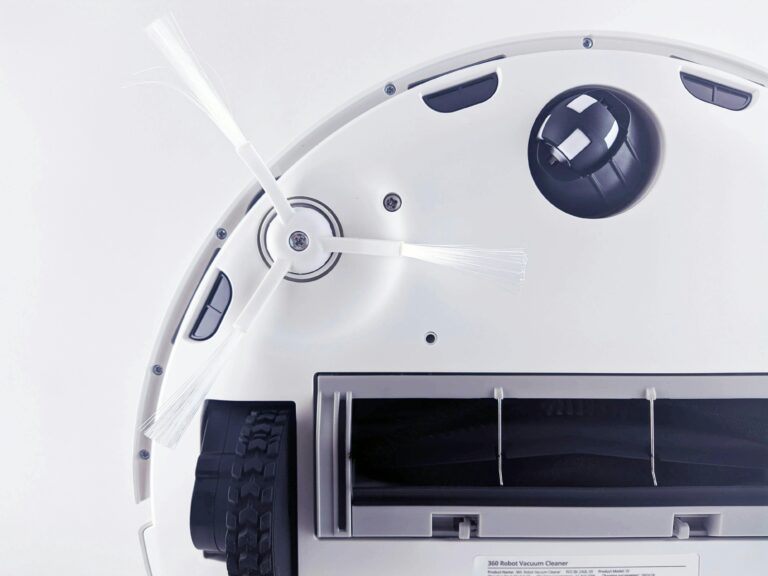
- Less refined wheel systems
Expensive models tend to:
- Last longer
- Handle daily use better
- Use stronger internal components
If longevity is part of your decision, How Long Do Robot Vacuums Last? Lifespan and Battery Reality breaks down what typically wears out first.
Paying more doesn’t guarantee double the lifespan — but durability does generally improve.
Smart Features: Useful or Just Flashy?
This is where marketing gets loud.
Expensive models often include:
- Room-by-room cleaning
- Virtual no-go zones
- Advanced obstacle avoidance
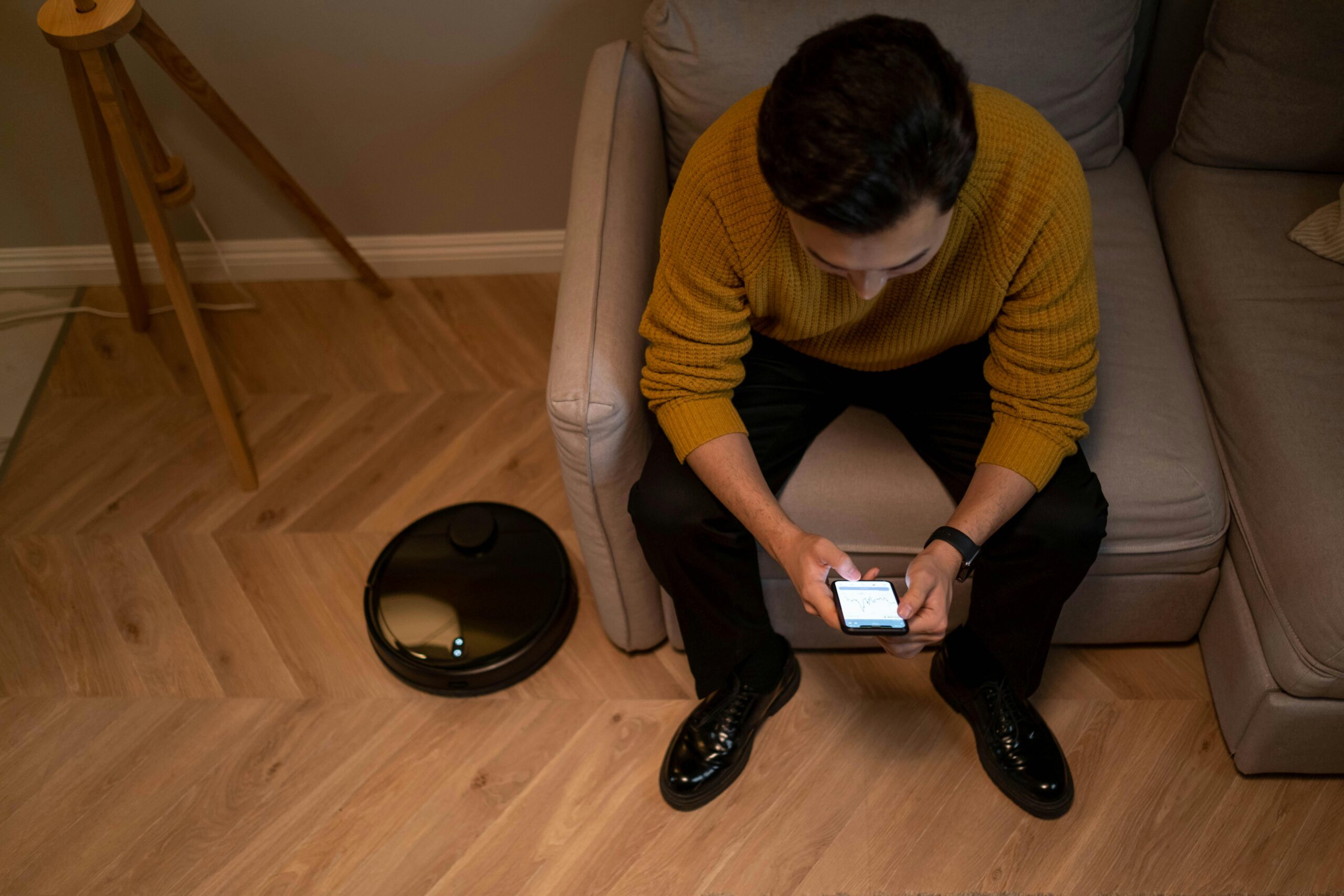
- Detailed cleaning maps
- Voice assistant integration
Some of these features genuinely improve usability.
Others are nice but unnecessary.
If you want to avoid overspending on features you won’t use, review Robot Vacuum Features People Overpay For before upgrading.
The most valuable smart features are usually:
- Reliable mapping
- Virtual boundaries
- Consistent navigation
Everything else is optional for many households.
Self-Empty Bases: Worth the Upgrade?
This is one of the biggest price jumps.
Cheap models require manual emptying after most runs.
Expensive models often include self-empty docks that:
- Automatically empty debris
- Store dust for weeks
- Reduce hands-on maintenance
For homes with pets or heavy debris, this feature can be worth it.
If pet hair is a major factor, Are Robot Vacuums Worth It for Pet Hair? explains why self-empty models sometimes make more sense.
For light-use households, it may be overkill.
Cleaning Performance: Is It Night and Day?
Not always.
On simple hardwood floors with light debris, a mid-range robot vacuum can perform surprisingly close to a premium one.
The difference becomes more noticeable in:
- Carpeted homes
- Pet-heavy households
- Larger floor plans
- Cluttered environments
The more complex your home, the more expensive models tend to justify their price.
If you’re still early in the research phase, Before You Buy a Robot Vacuum helps clarify what type of buyer you are.
Frequently Asked Questions About Cheap vs Expensive Robot Vacuums
Are expensive robot vacuums really better?
In navigation, mapping, and durability — usually yes.
In basic hard-floor cleaning, the difference may be smaller than you expect.
Is it worth buying a cheap robot vacuum?
It can be — especially for small apartments or homes with mostly hardwood floors.
Just understand that navigation and carpet performance may be limited.
Do expensive robot vacuums last longer?
Generally, yes.
They tend to use stronger motors and better internal components, which improves long-term durability.
Do I need advanced mapping?
If you have a larger home, multiple rooms, or want room-by-room control, mapping makes a big difference.
For small, simple spaces, it’s less critical.
Are self-empty robot vacuums worth it?
For pet owners or heavy daily use, often yes.
For light cleaning needs, manual emptying may be perfectly manageable.
What price range is the “sweet spot”?
For many households, the mid-range often delivers the best balance between performance and cost.
Ultra-cheap models cut corners. Ultra-expensive models add premium convenience.
Cheap vs Expensive — What Actually Changes?
Here’s the honest summary.
As price increases, you usually gain:
- Better navigation
- Smarter mapping
- Stronger carpet performance
- Improved durability
- More convenience features
You don’t necessarily gain:
- Double the cleaning power
- Double the lifespan
- A perfect, hands-free experience
The right choice depends on your home.
Small apartment with hardwood floors? A budget or mid-range model may be fine.
Large home with carpet and pets? Higher-end models often justify their cost.
Like most purchases in this category, the best value comes from buying the right level for your situation — not automatically choosing the cheapest or most expensive option.