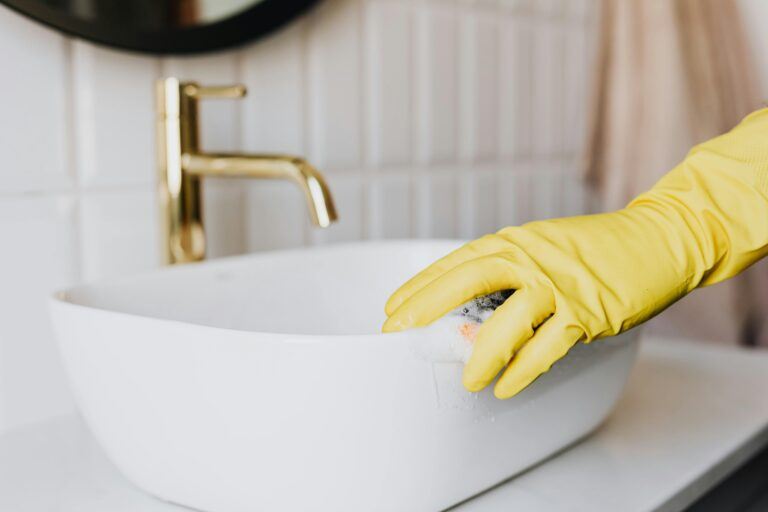
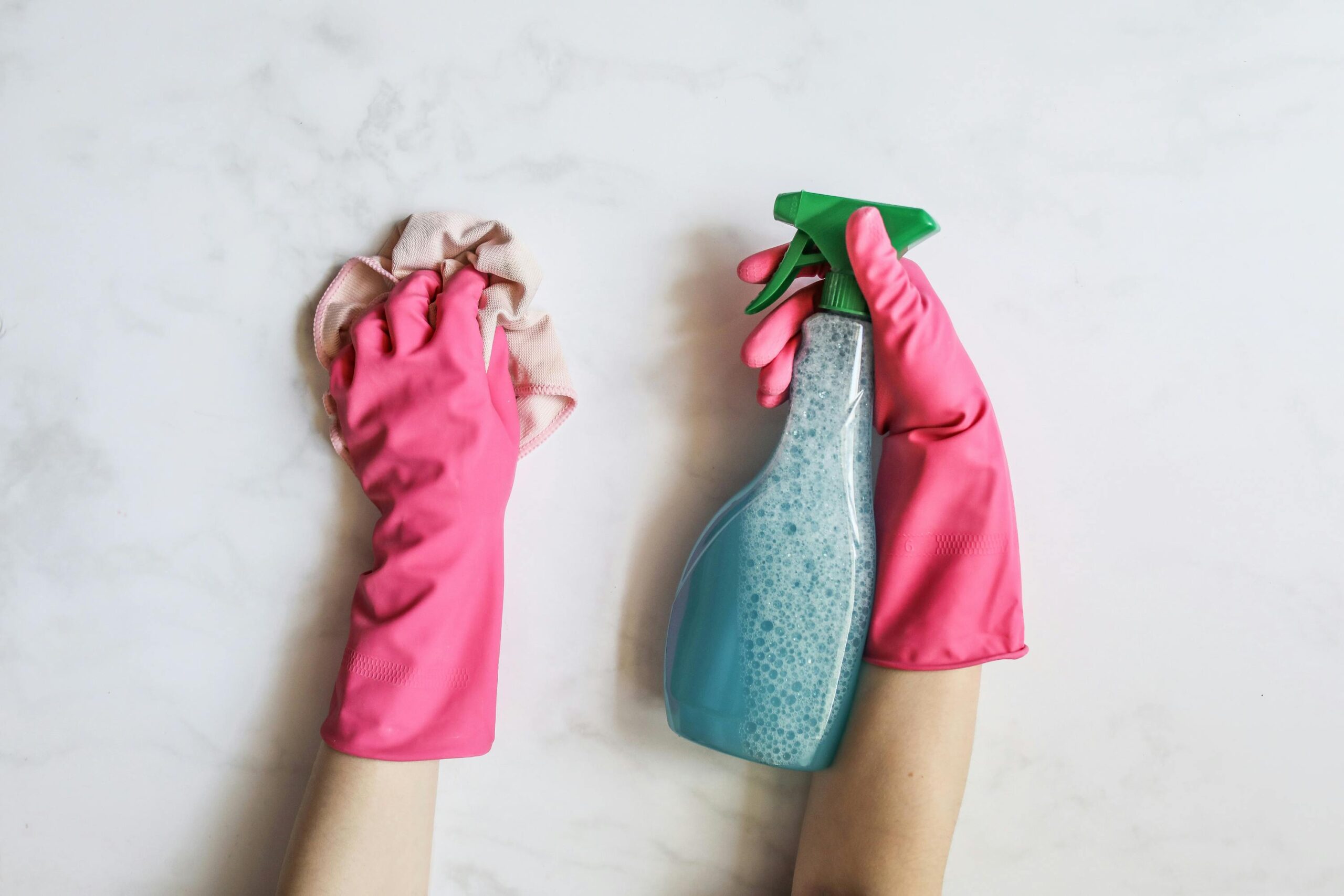
Before You Buy Cleaning Supplies
Cleaning supplies are some of the easiest items to overbuy — and some of the most commonly regretted.
Walk down any cleaning aisle and you’ll see products for every surface, every stain, every corner of your home. Each one promises to make cleaning faster, easier, or more effective. It’s easy to assume that if something isn’t working, the solution must be another product.
But in most homes, cleaning frustration doesn’t come from not owning enough supplies. It comes from owning too many of the wrong ones.
This guide is about slowing down before you buy. It’s about building a simple system instead of collecting bottles and gadgets that crowd your cabinets and complicate your routine.
You don’t need more products.
You need the right few.
Why Cleaning Supplies Are So Easy to Regret
Cleaning products are marketed around results. Sparkling countertops. Streak-free mirrors. Effortless shine. The promise is always the same: this one product will finally solve the problem.
What’s rarely mentioned is that most homes already have something that works.
Regret usually shows up in small ways. A half-used bottle pushed to the back of the cabinet. A mop that seemed revolutionary but feels awkward to use. A specialty spray bought for one specific issue that never quite justified the space it takes up.
Individually, these purchases aren’t expensive. But over time, they add up — not just in dollars, but in clutter. And clutter makes cleaning feel harder, not easier.
We’ll break down the most common examples in Cleaning Supplies People Regret Buying.
The Myth of a Product for Every Surface
One of the biggest reasons cabinets overflow is the belief that every surface needs its own dedicated cleaner. Granite cleaner. Stainless steel polish. Glass spray. Tile spray. Bathroom spray. Kitchen spray.
While certain materials do benefit from specific care, most everyday cleaning can be handled with a small, versatile core of products. An effective all-purpose cleaner paired with quality cloths often replaces several specialty bottles.
When you buy a separate cleaner for every room or surface, you’re not just spending more — you’re increasing friction. You have to remember which product goes where, store them all, and restock them individually. That complexity rarely translates into better results.
A simpler system usually works better.
Convenience Isn’t Always Convenient
Many cleaning supplies are sold as time-savers. Disposable systems, heavily engineered mops, tools with interchangeable heads and attachments — they all promise to streamline your routine.
Sometimes they do. But often they create new forms of inconvenience.
Disposable refills have to be repurchased. Complicated tools require extra assembly. Replacement parts become harder to find. And the more complex a system becomes, the more likely it is to sit unused when you’re in a hurry.
True convenience tends to come from durability and simplicity. Tools that are easy to grab, easy to rinse, and easy to store are the ones that get used consistently.
Again, we’ll look at specific examples inside Cleaning Supplies People Regret Buying.
What Actually Makes a Cleaning Supply Worth Owning
A worthwhile cleaning supply earns its place over time. It solves a recurring problem in your home and continues to do so without constant replacement or frustration.
If something only addresses a rare issue, it may not deserve permanent storage space. If it duplicates what you already have, it’s probably unnecessary. And if it feels flimsy or poorly designed, it will likely need to be replaced sooner than you expect.
Durability matters more than novelty. A well-made mop, brush, or microfiber system can last years and make cleaning noticeably easier. Cheap alternatives often wear out quickly, leaving you back where you started.
Storage also plays a bigger role than most people expect. Oversized buckets and bulky gadgets can make small spaces feel cramped. A tool that technically works but complicates your storage isn’t always an upgrade.
When It’s Worth Paying More
Not every cleaning supply needs to be premium. But some benefit significantly from better materials and construction.
Long-term tools — things like mops, vacuums, durable spray bottles, or microfiber systems — tend to justify higher upfront costs. When something is used weekly or daily, durability and performance matter.
Cheap versions of these tools often break, streak, shed fibers, or lose effectiveness quickly. Replacing them repeatedly costs more than investing in a reliable option once.
We’ll go deeper into exactly where quality matters in When It’s Actually Worth Paying More for Cleaning Supplies.
On the other hand, simple consumables like basic sponges or general-purpose cleaners rarely require a luxury upgrade. Spending more doesn’t automatically improve results.
The key is knowing where quality changes the experience — and where it doesn’t.
Building a Cleaning System That Lasts
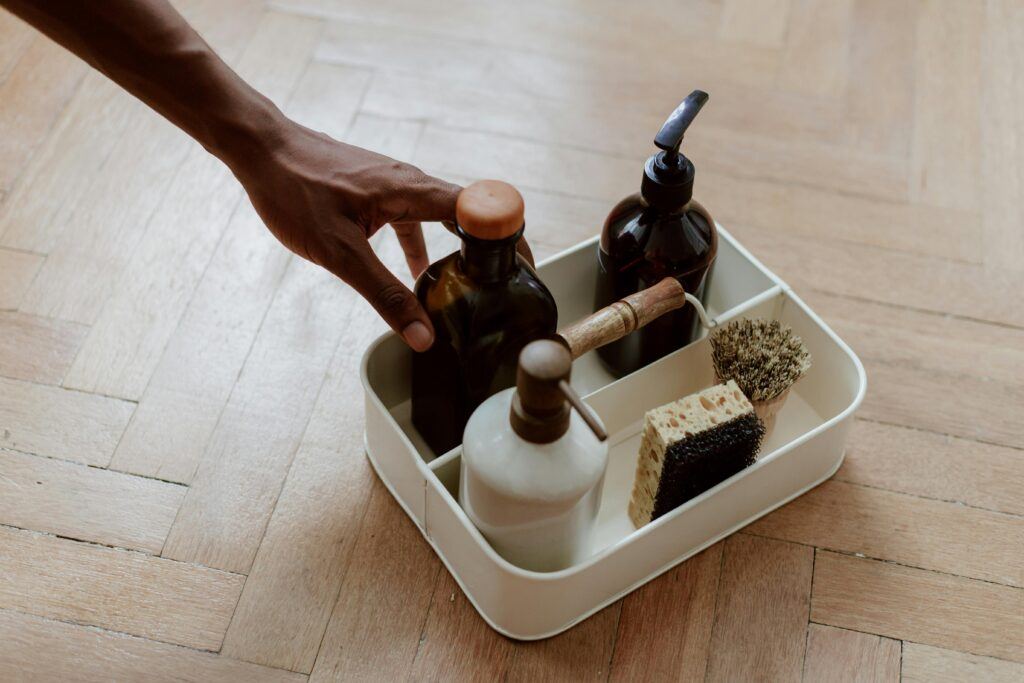
Instead of reacting to every new product launch, build your cleaning setup gradually.
Start with a small foundation: a dependable all-purpose cleaner, a reliable mop, quality cloths, a sturdy brush, and a vacuum suited to your space. Use them consistently. Notice what actually frustrates you.
If a recurring issue appears — maybe streaky floors or stubborn bathroom buildup — then look for a solution. But let your real routine guide upgrades, not advertisements.
Over time, this approach leads to fewer tools, better performance, and less clutter under your sink.
When you’re ready for a streamlined shortlist, head to Top 5 Cleaning Supplies That Actually Make Sense.
Final Thoughts
Before buying another cleaning product, pause.
Ask yourself whether it truly solves a recurring problem, whether you already own something similar, and whether it will still be useful a year from now.
If you’re unsure where to start next:
- Review Cleaning Supplies People Regret Buying
- Learn where to invest in When It’s Actually Worth Paying More for Cleaning Supplies
- Or jump straight to Top 5 Cleaning Supplies That Actually Make Sense
A clean home isn’t built with endless products. It’s built with a simple system that works.
Buy fewer supplies.
Choose better tools.
Keep it simple.